Maths for the masses
Seventy-six years ago, in central Africa, an archaeologist discovered a ten-centimetre prehistoric bone. It wasn’t any old bone. It had notches in it, 168 of them, in three columns. It was, at the very least, a tally stick used for recording quantities, and it might be some form of base-12 calculation. It is 20,000 years old, making it one of the oldest mathematical artefacts in the world.
As civilisations developed, they invented symbols for quantities, and counting systems. Babylon used a base-60 system, remnants of which have travelled down the centuries in the way we tell the time. The Mayans had a base-20 system. The Chinese Shang dynasty had a numeric system three thousand years ago. The Egyptians used hieroglyphs for numbers. Somehow, they managed to build the pyramids with them.
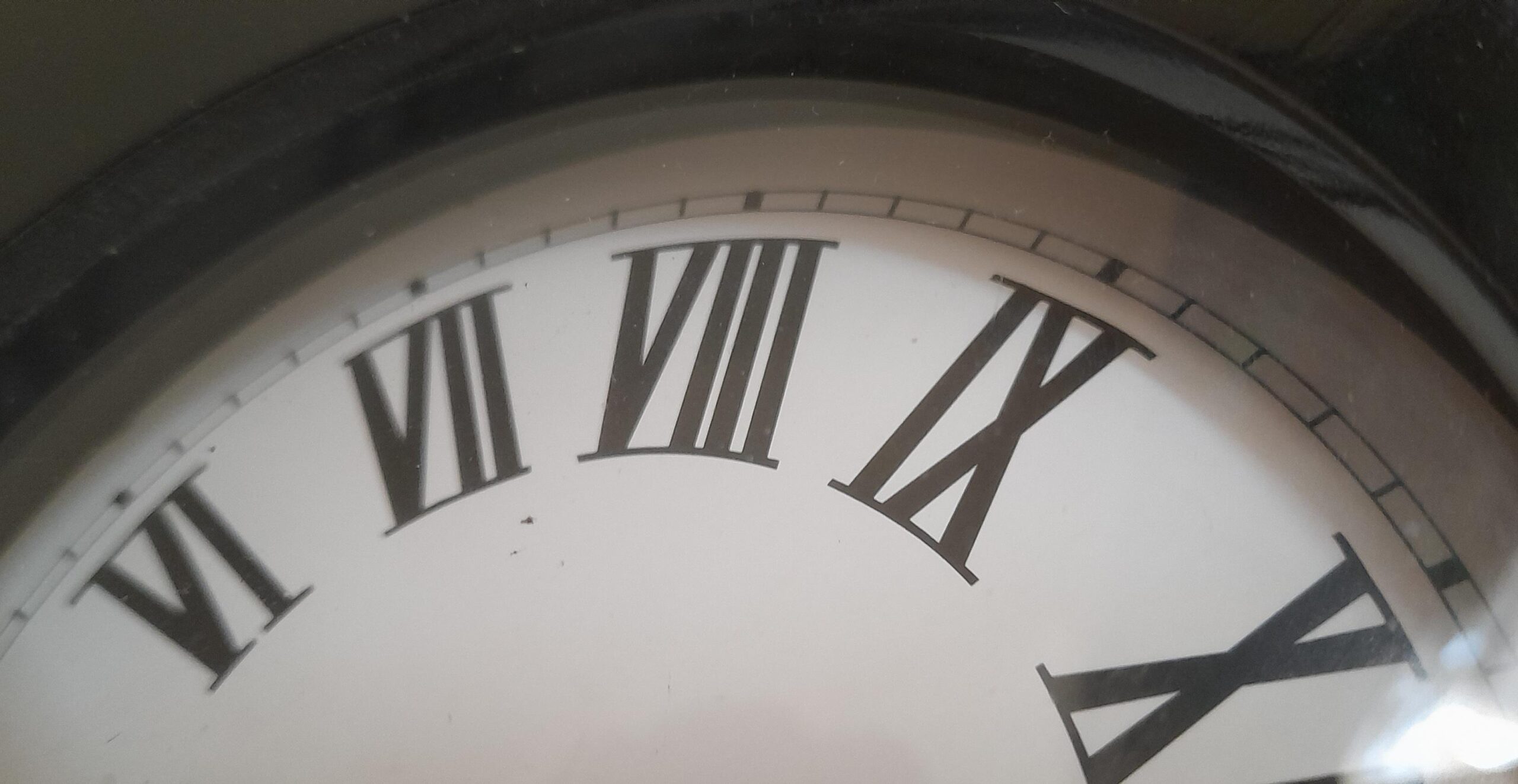
And the Romans – how did they do sums with all those Vs and Xs, and Ls, Cs, Ds and Ms? They did have a base-10 system, but it couldn’t be positional, and it didn’t have the concept of zero, so it was pretty inefficient. Romans relied on counting boards or an abacus, which was a sort-of positional system. Yes, those wonderful engineers did all their calculations with wooden beads. However, not many people needed to do complex calculations, and those who did just got used to the formulae they needed. Their fingers skipped away on the abacus faster than an observer could think.
And then, for Europe, came the Dark Ages, and the Middle Ages. These were not fertile times for mathematical development. Fortunately, Enlightenment was on its way.
In the early 800s, Muhammad ibn Musa al-Khwarizmi became a scholar at the House of Wisdom in Baghdad. He wrote significant works about algebra and quadratic equations. But let’s not hold that against him. Apart from being an all-round genius, he produced a textbook exploring Indian numerals and the base-10 positional number system that we know today. What we now call Arabic numerals originated in India a massive two thousand, three hundred years ago.
Pope Sylvester II, an accomplished scholar and early scientist who studied manuscripts from Moorish Spain, introduced Arabic numerals to Western Europe in the 980s. Alas, Europe was slow on the uptake. Not until 1202, when Leonardo Fibonacci demonstrated the advantages of positional notation to Italian merchants, do we see some initiative. Of course, it was useful in commerce. It enabled complex calculations to be done quickly. It could handle very big numbers, it didn’t require separate tallying tools and the calculations were easy to check. What’s not to like?
Nevertheless, the Arabic system was confined to Italy for another two hundred years. The Italian merchants were probably quite happy to keep that competitive advantage for as long as they could.
We have evidence of the use of Arabic numerals in England from the 1400s, including the date 1448 carved in an oak beam on a lych-gate in Bray. The invention of the printing press popularised Arabic numerals, and by 1800 they had almost completely replaced counting boards and Roman numerals.
I am old enough to remember having to do calculations in pounds shillings and pence. That was a mixed base-12 and base-20 system, and it was difficult. But at least we had Arabic numerals. I would suggest that only with Arabic numerals and positioning with zero, has it been possible to enable everyone to have a go at maths. It is easier to learn, to write, to use and to check.
Of course, today, we have computers to do the spadework of maths at lightning speed on a binary system. Both Arabic numerals and binary are positional number systems, and conversion between them is straightforward. For human comprehension, base-10 Arabic numerals work very well for calculations and measurements. Perhaps because we have ten fingers, it is a universal language. We should be very grateful to Leonardo Fibonacci for promoting them, and for enabling accounting, science and engineering to become accessible.
There are still some odd exceptions to our recognition of the joy of Arabic numerals. Roman numerals still appear on the copyright notices for movies. Why is that? There are lots of theories, such as – it disguises the age of the work, it’s more aesthetically pleasing and classical than Arabic numerals, and it’s more difficult for copyright pirates to tamper with them.
Whatever the reason, it’s an anomaly! I don’t think that there can be anything more beautiful than zero to nine, the ten symbols that make the world go round!