A new novel about a warmonger’s quest for peace after a bloody civil war draws on the local history of Metroland. The “clay hills” north-west of the capital are a special place in B B Elsin’s new fantasy novel, “Heroes and Traitors”. In this article, the author explains her discovery of the joys and challenges of creative writing, and her close-to-home inspirations.
Getting started
A few years ago, after an anxiety episode which eventually led to late diagnosis of autism, and unrelated sudden hearing loss, I found both work and leisure opportunities curtailed. Although hearing aids help in some scenarios, my world had become muffled and I wanted to withdraw into my own thoughts. I had a reasonable publication record in non-fiction as a business academic, so I thought I could switch to creative writing quite easily. I was so very wrong! It is a field which has come a long way since I did compositions for English classes. I would say that the process of producing a novel has been almost as demanding as doing my PhD. The waves of edit after edit were certainly equivalent!
I decided to adopt the fantasy genre so that I could indulge my love of exploring history’s “what ifs?” It gave me the freedom to throw some influential characters of early modern Europe into new scenarios. I dipped into local history as well. I was brought up in South Buckinghamshire and I have deep family roots here.
A local historical hero
John Hampden, whose country estate nestled between Prestwood and Great Missenden, was a local historical hero to me as a child. His quest for rule by consent, and his values as a public-spirited, modest team player are recognisable in Yoshi Clayhills, the post-war leader of fractured Kimalloa, who is a key member of the supporting cast in the book.
Chenies Manor House is the model for his country home, and I urge you to go there to see why! It is in a lovely place, and boasts most of the fashionable features of early modern architecture, such as several patterned, cut-brick chimney stacks, mullioned oriel windows, and extensive use of brick and roof tiles. It is said to be one of the earliest brick buildings in England.
A local industry
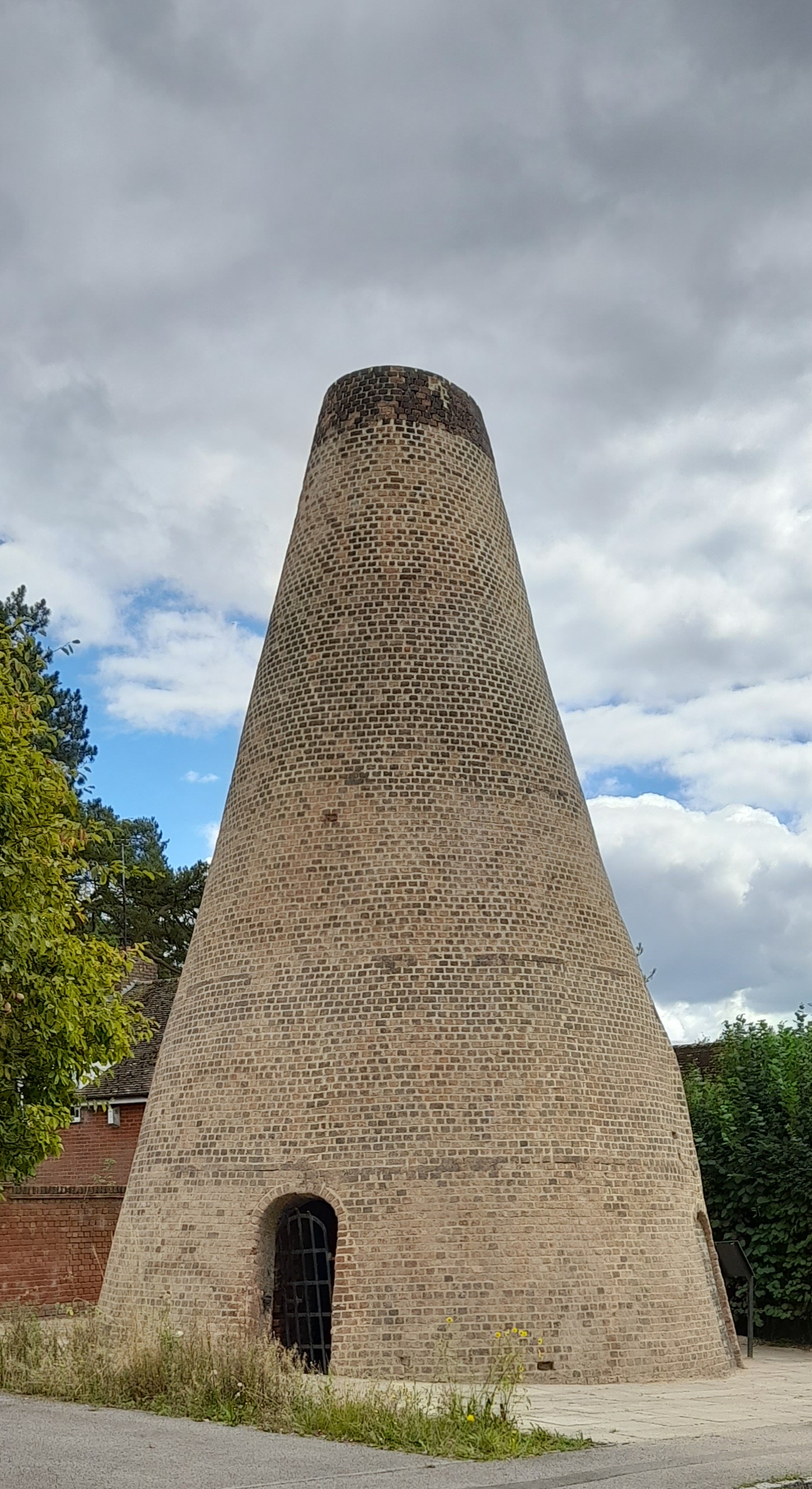
There are several references in the book to the brick-making industry in the clay hills. The entrepreneurial drive to use resources in the earth to make things is clearly one of the drivers of the rebellion. Before we were famous for making furniture, brick-making was an important industry in the Chilterns. There are many examples of local brickwork in our older towns and villages, for example, local roof tiles are evident on some 17th century buildings in Old Amersham. Bricks were produced in bottle-shaped kilns, close to sources of clay, chalk, wood and water. Some of the largest surviving clay pits are in Coleshill and Winchmore Hill, which demonstrates the quantity of work undertaken, but quality was also achieved in our area. Elaborately-decorated Penn tiles still survive in many English churches.
Local martyrs
Like the English Civil War, Kimalloa’s civil war has a religious element. South Buckinghamshire was a radical place in the past. The Chiltern Lollards, who wanted to read the Bible in English and pray in English, were persecuted for over 200 years. The heroic deaths of the Amersham Martyrs of 1506 and 1521 and Thomas Harding of Chesham, who was the last Lollard executed in England in 1532, were important to local communities. During the Civil War, social radicalism was added to the mix. One of the scene-stealers in the book is Seemo, the leader of a group called the Distributors, whose beliefs owe a lot to the Diggers and their “Light Shining in Buckinghamshire” pamphlets written in Aylesbury.
The big picture
Although it has local colour, Heroes and Traitors is a mix of local, national and international political intrigue. Like all fantasy worlds, it depends on some exotically different scenes, although this world has a fairly modest role for magic, and – spoiler alert – there are no dragons! The ill-starred love between the two flawed protagonists provides an element of romantasy, and of course there is a quest. After an act of vengeance, the main character pledges himself to crafting a peace for his adopted country, which is deeply embittered and devastated in the aftermath of its revolution. Who is a hero and who is a traitor depends on which side you are on, and there are a lot of sides in Kimalloa. The story explores the points of view of the winners and losers, idealists and cynics, the powerful and the poor.
Lessons learned
Having creating a novel somewhat late in life, of course, I wish that I had started earlier! It was hard work, but the satisfaction is remarkable. I do hope that more people of my own age will tell their stories, and younger folk will not leave it too late. Since getting involved in writers’ groups online and offline, and trying out writing competitions, I have been amazed at the wealth of creative talent pouring out of us all.
Because it is now possible to self-publish, or seek help from a hybrid publisher as I did, writers no longer have to wait to see their work in print. Many thousands of books are published in the UK every year, which gives the reading public a phenomenal amount of choice. It also gives writers their voice and a platform. We can’t all succeed commercially, but we can complete and share our work. Whether it is your own memoir or bedtime stories, or that curious idea you always wanted to explore, your family, friends and future historians will thank you for your testimony!
:
Photo: Surviving 17th century brick kiln at Nettlebed, south Chilterns.
This article was first published in Metroland, November 2025