THE GLORY OF TREES
Like most Brits, I am awed by mighty trees. We love them when they are alive, and we love the produce we get from them. Oak was a vital resource in England in medieval times, for building and ship-building. “Heart of Oak” is the marching anthem of the Royal Navy. English archers, with their longbows made from yew-wood, were the pride of the Army. Beautiful beeches were turned into affordable furniture.
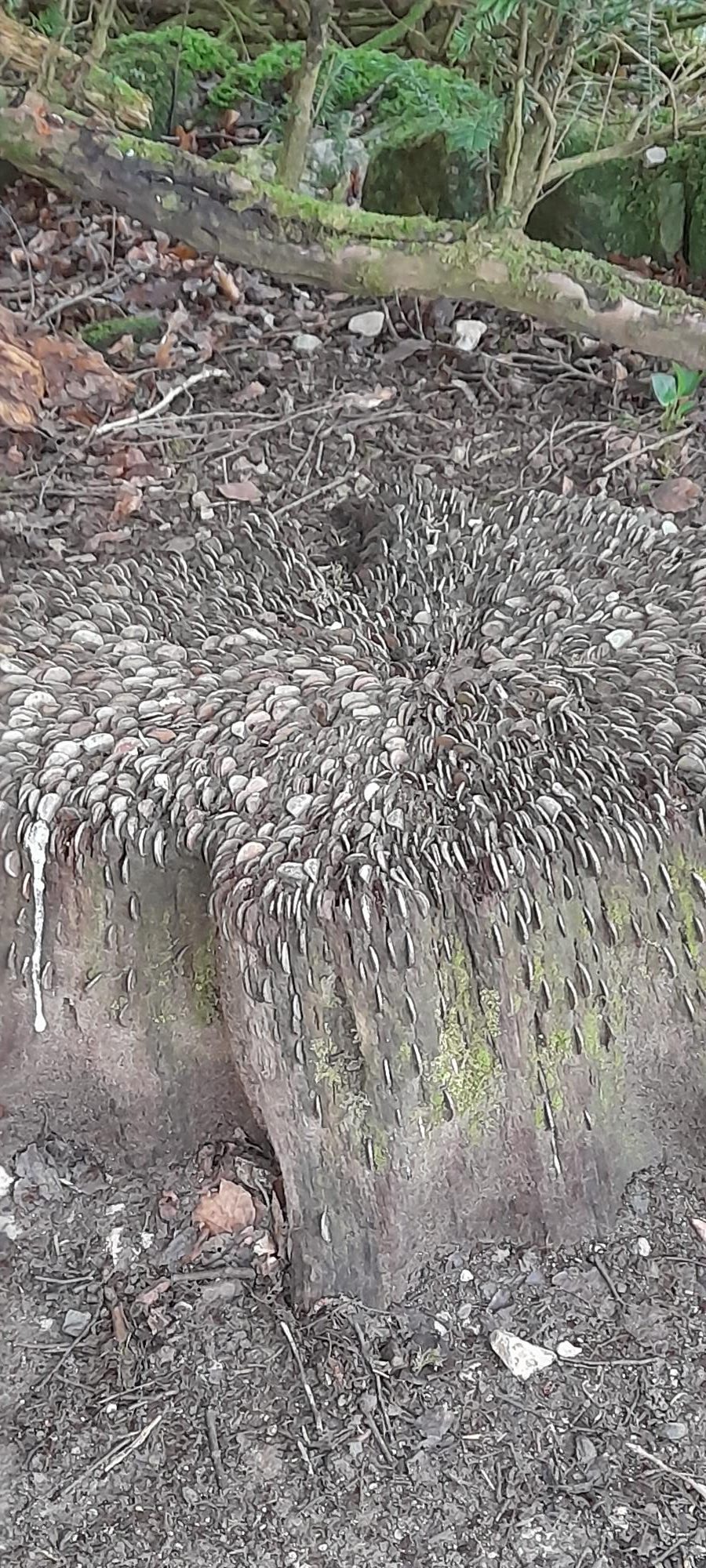
It seems odd that a few trees have been singled out for intense metallic augmentation (see photo). We don’t know much about why people hammer coins into trees, stumps, or old beams in pubs. There are a few sites in Wales, the North of England and Scotland where trees have been “decorated” in this way.
It is assumed that it goes back to pagan beliefs in spirits that lived in trees, and the coin is an offering. We still “touch wood” for luck, and leaving coins in bark, it is said, is a way of asking for more good fortune. I am not sure of the logic of that, but it obviously works for some folk. I could believe that hammering an offering into a stump might be an apology to the spirit for felling their home.
Worshipping trees in one way or another seems to be a very ancient tradition. When I was writing Heroes and Traitors, I wanted a religious conflict that was analogous with the conflicts of early modern Europe, but I wanted a big contrast in the belief systems. The Sudarite religion of monarchist Kimalloa is similar to those of ancient Europe. The names will seem familiar – most are based on Greek and Roman deities, but there are Druid practices as well. Trees are sacred. Sudarites worship collectively in the open air, in groves of willow and they rub the bark of particular lone trees, usually an oak, for their personal prayers.
The Followers of Truth abhor all “superstitious” rituals. But – just as Christianity never stopped Brits “touching wood” for luck, they are going to have to adapt.