The average person receives at least one scam email a day. Depending on how active you are on the Internet, it could be a lot more. Most of us would recognise the mass-market scam:
Mum, I’ve lost my phone.
Click on this link to unlock your prize.
We tried to make a delivery to you.
Your security has been compromised.
I saw your beautiful smile.
It is so prolific. It’s annoying and sometimes scary. My fingers shake as I hurry to try to block the source, even though I know that the fraudsters have hundreds of IDs and will try again.
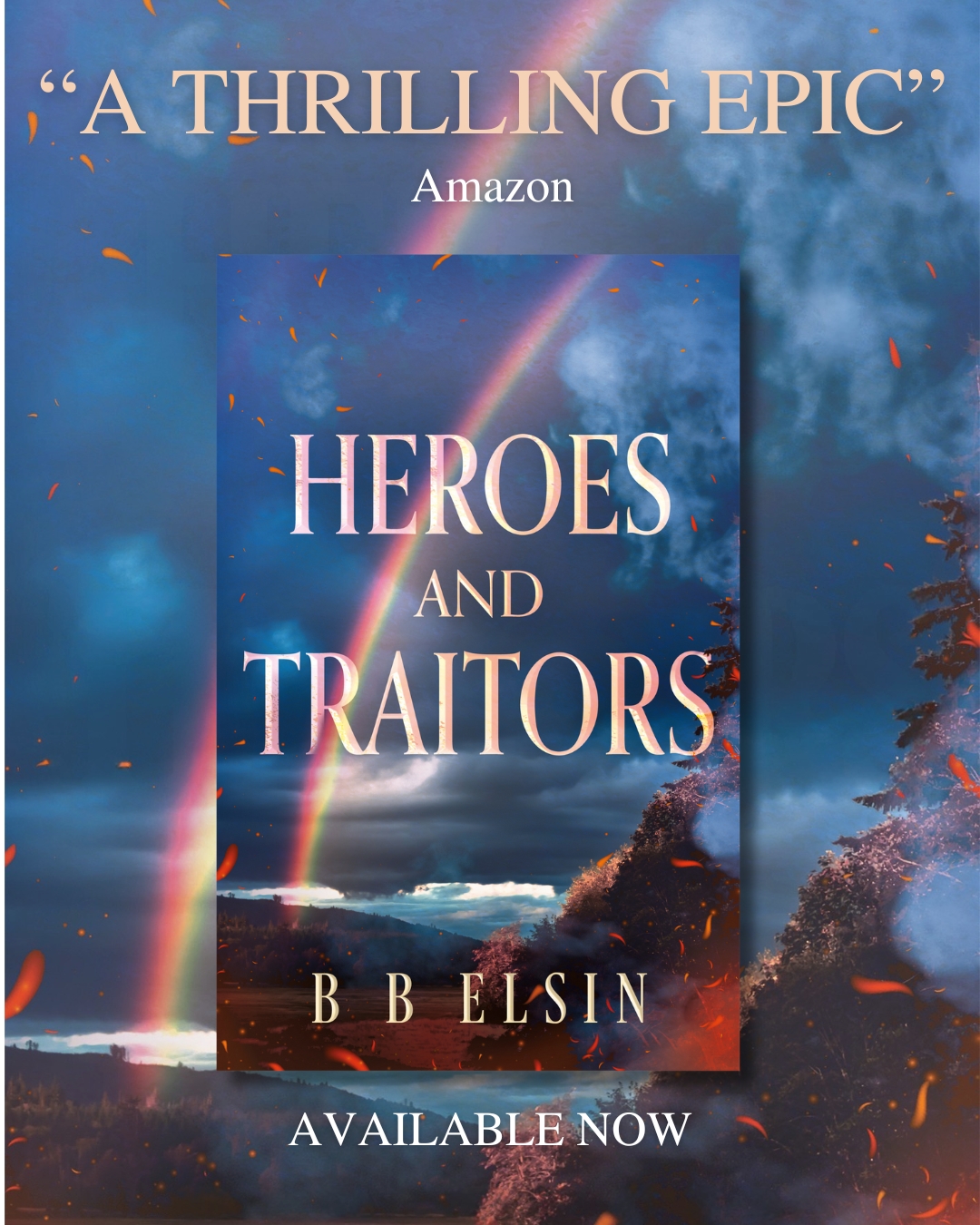
Since the publication of my first novel, I have been exposed to niche-market scamming. There is an amazing array of scams aimed at authors. The Society of Authors and Writers Guild of Great Britain get dozens of calls about them every week. Some authors, who are doing what publishers advise, getting out there to try to connect with readers, get heavily targeted by scammers.
I’ve had messages that start with:
“Dear Author” or “Dear Elsin”
Oh dear. The bot can’t cope with my pen name. Failed at the first hurdle.
But when it’s “Dear BB” I might read on.
“I came across your book…”
Yes, the AI bot found a new title on Amazon, and calculated that I would be desperate for its success. It’s right of course. I am vain enough to think that my book should be read, and the tiny odds of that happening depress me. So, I read on.
“The novel immediately stands out for…”
“I was inspired by the book…”
“The insights have moved me…”
“I was particularly struck by…”
And how many people gush with flattery like this to a complete stranger?
Next, the bot shows me its craft in scraping what reviewers have said is good about the book. Sometimes, it looks like it has read the whole book, probably from a pirate copy, of course. What reader spends three or more paragraphs telling the author who wrote the book what’s in it?
I look carefully at this description, and I spot three things that scream “I am a bot” at me.
First of all – is the grammar and language too perfect? As humans we all have idiosyncrasies in the way we use language, especially in short communications.
Secondly – is the use of colons or semi-colons excessive? Humans hardly ever use them when a comma or full stop would do.
For example: “This is not just an epic; it is awesome.”
Thirdly, the rule of three. Humans are taught the rule of three, because as humans we can just about cope with three things at once. In fact, I’ve done it here because I can manage to run three checks in my head on the linguistics of an email. Robots accentuate that style. For example:
“You had the right idea, you crafted the story and built something meaningful.”
If virtually every sentence in an email has three concepts in it, a bot wrote it.
Now, some clever scams stop with the flattery. The bot just grooms the author into believing that they have a fan. They encourage a response, and once you respond, it will flatter you some more before asking for money. But most scammers are impatient, they try and do it all in one hit.
“The book has a strong appeal.”
“There is clear potential to expand its visibility.”
“It’s realistic to project $2000 in sales growth.”
OK, now get on with it…where’s the sting?
The popular vehicles for the author scam are marketing-oriented. You are most likely to be offered marketing services, such as an interview on a podcast. You might be offered reviews or listings with book clubs. You might be told that the book has won an award. The email might even pretend to be from a famous author, or editor, or literary agent. Check the email account. Would they would contact a stranger out of the blue from their gmail? Really? Whoever the message claims to be from, eventually, the fraudsters behind it want your money.
The usual rules of common sense apply. If it sounds too good to be true, it is. Not probably. It just is.
When I meet fellow authors at local literary festivals, we joke about some of the ridiculous scam emails we’ve received. But it’s bravado, because it’s not very funny that evil empires of fraudsters are attacking people sharing their creativity with the world, perhaps for the first time. No one is out there trying to catch these criminals. All we can do is protect ourselves. Please – if you get one of these messages, close it, take a deep breath, and read the advice on the Society of Authors and Writers Guild of Great Britain web-sites.